When a commercial roof starts showing its age, minor leaks, ponding water, cracking, or worn seams, the first fear many building owners have is “Do we need a full replacement?” The good news: in many situations, you may have a more budget-friendly option.
Commercial roof coatings and liquid-applied membrane systems can restore performance, extend roof life, and improve energy efficiency- often at a fraction of the cost of tearing off and relacing the entire roof. Below is a practical breakdown of the most common coating types and systems, where they’re used, and why they can be such a smart financial move.
Why Coatings Can Be A Cost-Saver Vs Replacement
A full roof replacement typically involves labor-intensive tear-off, disposal costs, potential business disruption, and the expense of new materials and installation. Coating systems, on the other hand, are often installed over an existing roof (when the roof is a good candidate), reducing demolition and landfill fees.
While every building is different, many owners choose coatings because they can:
- Extend roof life by adding a new protective layer over the existing system
- Reduce downtime compared to a full tear-off
- Lower energy costs with reflective “cool roof” surfaces
- Improve waterproofing and protect against UV damage
- Delay replacement and spread capital expeneses over time
Important notes: Coatings aren’t a magic fix for every roof. If the roof has widespread saturated insulation, structural issues, or severe deterioration, replacement may still be the right call. But for many commercial roofs that are aging yet still structurally sound, coatings can be an excellent “restore, don’t replace” strategy. Building owners should always check with their insurance provider for approval before proceeding.
Elastomeric Roof Coatings (Flexible, Durable Protection)
Elastomeric roof coatings are a broad category of coatings designed to stretch and return to shape (elasticity). That flexibility matters because commercial roofs expand and contract with temperature swings. A coating that can move with the roof helps reduce cracking and premature failure.
Elastomeric coatings are commonly used to:
- Seal small cracks and pinholes
- Add UV protection and slow down weathering
- Improve reflectivity (depending on product)
Elastomeric coatings can be formulated as acrylic, silicone, polyurethane, and other blends. If you’re comparing options, elastomeric performance often comes down to the specific chemistry and the roof conditions (ponding water, slope, exposure, etc).
Sprayed-On Roofing Systems (Fast Coverage, Seamless Results)
Sprayed-on roofing systems typically refer to spray-applied materials that create a continuous, monolithic surface. The most common example is spray polyurethane foam (SPF) paired with a protective coating.
Why owners like sprayed systems:
- Seamless waterproofing: fewer joints means fewer leak pathways
- Speed of installation: large areas can be covered efficiently
- Added insulation value: SPF can improve thermal performance
Sprayed systems can be especially attractive when energy savings are a priority. By improving insulation and reflectivity, some buildings see meaningful reductions in HVAC load, particularly in hot, sunny climates.
SEBS Roof Coatings (Strong Chemical Resistance and Flexibility)
SEBS (Styrene-ethylene-butylene-styrene) roof coatings are known for toughness, flexibility, and resistance to weathering. They’re often solvent-based and can perform well in challenging environments.
SEBS coatings are frequently chosen for:
- Roofs exposed to harsh UV and temperature extremes
- Situations where stong adhesion is needed
- Areas where chemical resistance is beneficial
Protect selection depends heavily on the existing roof type and local conditions. SEBS is usually the best evaluated with a contractor who can confirm compatibility and prep requirements.
Liquid-Applied Coating Systems (Restoration with a Custom Fit)
“Liquid-applied” is an umbrella term that includes multiple chemistries and installation methods. The key benefit is that the system is applied as a liquid and cures into a seamless membrane, conforming to penetrations, edges, and irregular shapes.
Liquid-applied coating systems can be ideal for:
- Roofs with lots of penetrations (HVAC curbs, vents, drains)
- Complex roof geometries
- Owners who want a full-adhered, semaless waterproofing layer
Many liquid-applied systems are installed with reinforcement fabric at seams, transitions, and high-stress areas to improve durability.
Silicone Coatings (Excellent for Ponding Water)
Silicone is a popular choice for commercial roofs because it performs well in wet conditions and holds up strongly against UV exposure.
Key Advantages:
- Excellent resistance to ponding water (a major issue on many flat roofs)
- Strong UV stability
- Long-term weather resistance
Silicone is often used on existing single-ply membranes, modified bitumen, metal roofs, and other substrates, assuming proper preparation and adhesion testing.
Acrylic Coatings (Reflective, Cost-Effective, Widely Used)
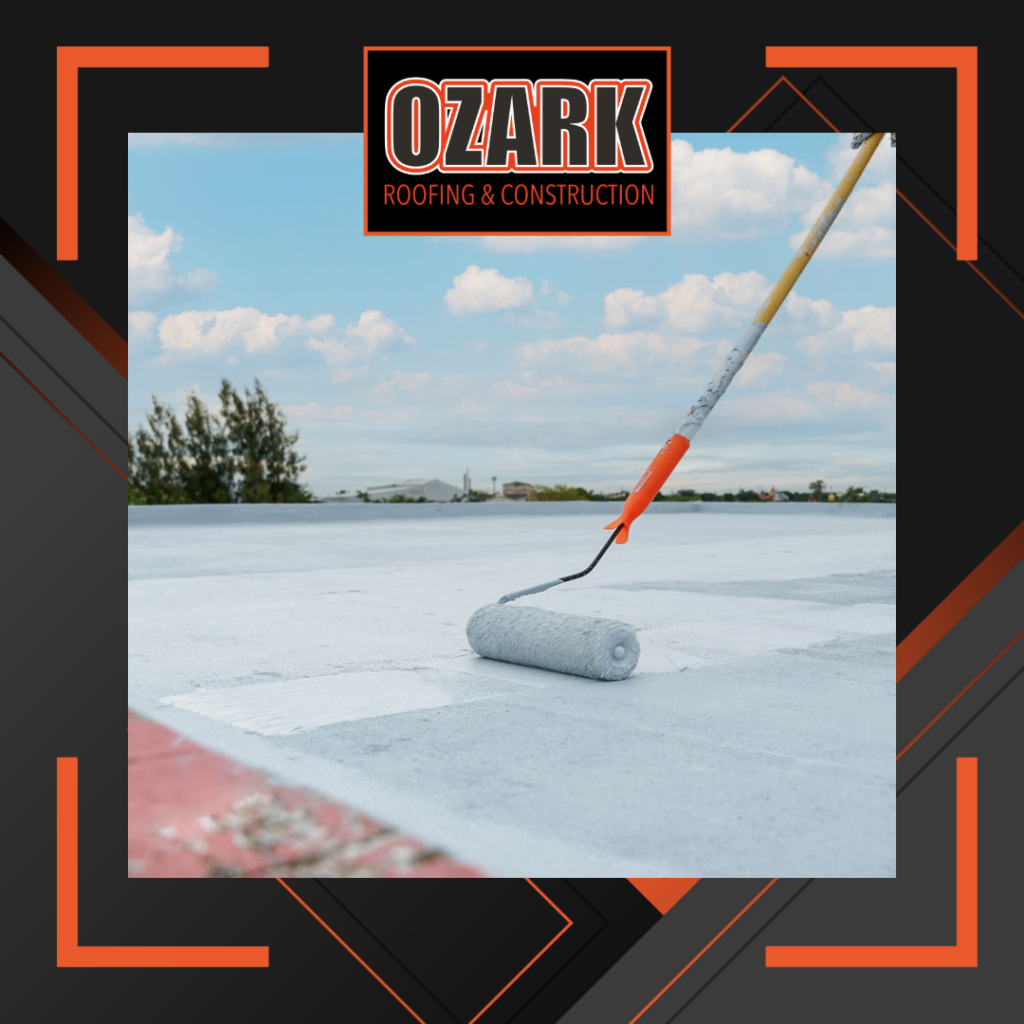
Acrylic coatings are water-based and commonly used for their reflectivity and affordability. They’re frequently chosen for cool roof” performance, helping reduce rooftop temperatures and potentially lowering cooling costs.
Why acrylic is popular:
- Budget-friendly compared to some premium chemistries
- Highly reflective (often bright white)
- Easy application and cleanup
Acrylic coatings may not be the best fit for roofs with chronic ponding water, so drainage and roof slope matter when deciding if acrylic is right.
Polymer-Based Liquid-Applied Membranes (Durable, Versatile Systems)
Polymer-based liquid-applied membranes include a range of products engineered for durability, adhesion, and flexibility. Depending on the formulation, these systems can offer strong mechanical performance and resistance to wear.
They’re often used when:
- The roof sees foot traffic or maintenance activity
- The owner wants a robust membrane with reinforcement options
- The roof has details that are difficult to address with sheet goods
“Polymer-based” can describe multiple chemistries; it’s best to evaluate the specific product’s strengths: UV resistance, ponding tolerance, elongation, and warranty options.
Liquid-Applied Membranes: Comparing Savings to Replacement
The biggest financial advantage of coatings is that they can reduce or eliminate tear-off costs and extend the service life of the existing roof. Instead of paying for demolition, disposal, and brand-new assembly, you’re investing in restoration.
In many cases, coatings can:
- Cost significantly less than replacement (especially when the tear-off is extensive)
- Reduce dispoal and landfill fees
- Minimize disruption to tenants and operations
- Deliver energy savings through reflectivity and, in some systems, added insulation
The exact savings depend on roof size, condition, required repairs, coating thickness, and warranty length. But for owners who want to control costs while still protecting the building, coatings are often one of the most practical options available.
How To Know If Your Roof Is A Good Candidate
A reputable commercial roofing contractor will typically start with an inspection and may recommend moisture scanning or core cuts to confirm whether insulation is wet. A roof coating system is usually a good fit when:
- The roof structure is sound
- Wet insulation is limited or can be addressed
- The existing membrane is generally intact
- The roof can be properly cleaned an dprepared
Next Steps
Commercial roof coatings aren’t just a “quick fix”, when properly selected and installed, they’re a proven way to extend roof life, improve performance, and protect your budget. From elastomeric coatings and sprayed-on systems to SECS, silicone, acrylic, and polymer-based liquid-applied membranes, there are multiple paths to a restored roof without the cost and disruption of a full replacement.
If you’re weighing your options, the next best step is a professional inspection to confirm whether restoration is viable and which coating system best matches your roof’s conditions and your long-term goals.
Request a free inspection by phone or schedule through the link below.
Schedule online through the link below.
Phone: 727-222-1863